
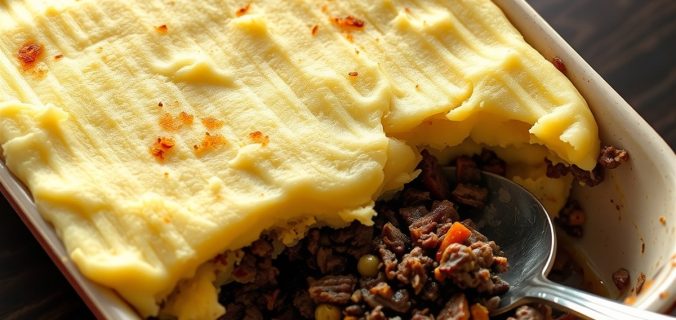
The photo above was generated using AI. Made this and have a real photo? We’d love to feature it — submit yours here.
Cottage pie is the dish most people cook from memory rather than from a recipe, and the memory usually includes a layer of grey liquid seeping up through the mash. That’s one problem with one cause, and it’s fixed before the mash ever goes on.
Serves 6, about an hour and twenty minutes.
Cottage pie or shepherd’s pie?
Cottage pie is beef. Shepherd’s pie is lamb. That’s the whole distinction, and it’s not arbitrary — shepherds keep sheep.
Cottage pie is the older name, going back to the late 1700s when potato became cheap enough to be a peasant staple; shepherd’s pie appears about a century later. In New Zealand the two names get used more or less interchangeably, which is why plenty of people are confused, but if you want to be right about it: beef is cottage, lamb is shepherd’s.
Everything below works for either. Use lamb mince and it becomes a shepherd’s pie.
Reduce the filling, properly
This is the whole game. A mince filling straight off the stove is far wetter than it looks, and the mash floats on it, cracks, and lets liquid up through.
The filling should be thick enough to hold a spoon track for a second or two before closing — the same test as the mince and cheese pie. That means simmering it uncovered for 25 minutes, not 10, and being patient while it looks like nothing is happening. It’ll reduce quite suddenly in the last five minutes.
Let it cool for ten minutes before the mash goes on, too. Hot filling steams the underside of the potato and makes it gluey.
Mash that sits on top instead of sinking
Three things.
Keep it dry. Drain the potatoes well and let them steam in the colander for two minutes. Wet mash is heavy mash, and heavy mash sinks.
Don’t make it too soft. This isn’t mash for a plate — it needs to be stiff enough to spread without slumping. Use less milk than you would normally, and use butter for the richness instead.
Spoon it on in blobs around the edge first, then work inward and join them up. Dumping it in the middle and pushing outward drives it down into the filling.
The forked top
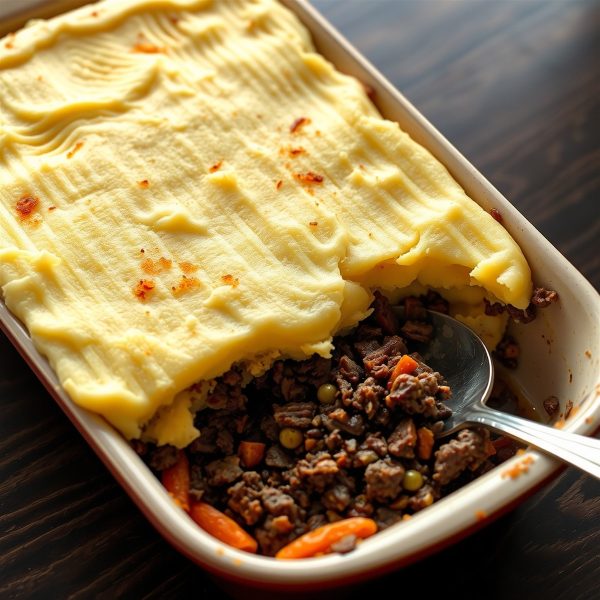
Rake the surface with a fork before it goes in the oven. It isn’t decoration — the ridges are thin, they dry out first, and they brown into crisp peaks while the mash underneath stays soft. A flat top browns evenly and gives you none of that contrast.
A scatter of grated cheese over the top is not traditional and is very common in New Zealand anyway. It’s good. Do it if you want it.
Frequently asked questions
What is the difference between cottage pie and shepherd’s pie?
Cottage pie is made with beef, shepherd’s pie with lamb. That’s the only difference — shepherds keep sheep. Cottage pie is the older term; shepherd’s pie appears about a hundred years later.
Why is my cottage pie watery?
The filling wasn’t reduced enough. Simmer it uncovered until a spoon dragged through the pan leaves a track that holds for a second. Most recipes underestimate how long this takes — allow 25 minutes.
Why does my mash sink into the filling?
Either the mash was too soft, or it was spooned into the middle and pushed outward. Make a stiffer mash with less milk, and spoon it on around the edge first, working inward.
What potatoes are best for the mash?
Floury ones — Agria or Ilam Hardy. They mash light and dry. Waxy potatoes go gluey when mashed, which is the opposite of what you want here.
Can I make cottage pie ahead?
Yes, and it’s better for it. Assemble it completely, cool, and refrigerate for up to two days. Bake from cold, allowing an extra 15 minutes.
Can I freeze it?
Yes, assembled and unbaked, for three months. Bake from frozen at 180°C for about 1 1/4 hours, covered for the first 45 minutes.
Do I have to put cheese on top?
No, and it isn’t traditional. It’s very common in New Zealand and it’s good, so do as you like.
Can I use lamb mince?
Yes, and then it’s a shepherd’s pie. Everything else in the recipe stays the same.
Variations
- Shepherd’s pie — lamb mince instead of beef, and rosemary instead of thyme.
- Kūmara top — half kūmara, half potato in the mash. Slightly sweet, and it browns beautifully.
- Extra vegetables — a diced parsnip or swede with the carrot, or a handful of mushrooms with the mince.
- Red wine — replace half the stock with red wine and simmer five minutes longer.
- Cheesy leek mash — soften a sliced leek in butter and fold it through the mash with the cheese.
| Prep Time | 25 minutes |
| Cook Time | 55 minutes |
| Servings |
servings
|
- 1 Tbsp oil
- 1 large onion finely diced
- 2 carrots finely diced
- 2 sticks celery finely diced
- 2 cloves garlic crushed
- 750 g beef mince
- 2 Tbsp plain flour
- 2 Tbsp tomato paste
- 1 1/2 cups beef stock 375 ml
- 1 Tbsp Worcestershire sauce
- 1 tsp Marmite
- 2 sprigs thyme
- 1 cup frozen peas
- salt and freshly ground black pepper
- 1.2 kg floury potatoes peeled and cut into chunks, Agria or Ilam Hardy
- 75 g butter
- 1/3 cup milk warmed, 80 ml
- 1 cup grated tasty cheese (optional) 100 g
Ingredients
Filling
Mash
|
|
- Heat the oil in a large pan and cook the onion, carrot and celery over a medium heat for 10 minutes until soft. Add the garlic for a final minute.
- Add the mince and break it up, cooking for 8–10 minutes until well browned. Take your time — this is where the flavour comes from.
- Stir in the flour and tomato paste and cook for a minute, then add the stock, Worcestershire sauce, Marmite and thyme.
- Simmer uncovered for 25 minutes, stirring occasionally, until thick enough that a spoon dragged through the pan leaves a track. Stir in the peas, season well, and take off the heat to cool for 10 minutes.
- Meanwhile, boil the potatoes in salted water for 15–18 minutes until tender. Drain and leave in the colander for 2 minutes to steam dry.
- Mash with the butter and just enough warm milk to make a stiff, smooth mash. Season well. It should hold its shape on a spoon.
- Heat the oven to 200°C (180°C fan). Spoon the filling into a 2.5 litre baking dish.
- Spoon the mash on in blobs around the outside edge first, then fill in the middle and join it all up with the back of the spoon. Rake the surface with a fork and scatter over the cheese if using.
- Bake for 30 minutes until the top is golden and crisp at the peaks and the filling is bubbling at the edges.
- Stand 10 minutes before serving.