
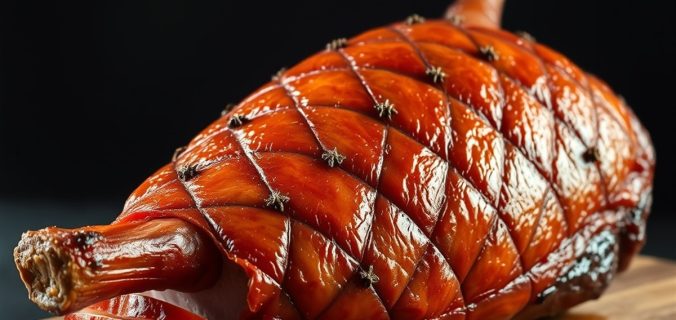
The photo above was generated using AI. Made this and have a real photo? We’d love to feature it — submit yours here.
The Christmas ham is the least stressful thing on the table, because it arrives already cooked. You are not cooking a ham. You are warming it through and putting a glaze on it, and the entire job is about ninety minutes of oven time you can do the day before.
This serves about 20 from a 5 kg half leg, which is the size most New Zealand families buy.
What to buy
A half leg on the bone is the default and the right choice for a table of ten or more. The bone keeps the meat moist, it carves better, and — not a small thing — you get the bone afterwards, which is worth a pot of pea and ham soup in January.
Allow about 250 g per person if the ham is the centrepiece, less if it’s one of several meats. A 5 kg half leg feeds 20 comfortably with leftovers, which in a New Zealand summer is the actual point of a Christmas ham.
Boneless is easier to carve and fits a smaller oven, but it’s noticeably drier and you lose the bone. A whole leg is 8–10 kg and won’t fit most domestic ovens.
Taking the skin off without wrecking it
This is the part people dread and it takes about two minutes once you know the trick.
Run a small sharp knife around the shank end, through the skin only, about 10 cm up from the bone. Then slide your fingers — not the knife — between the skin and the fat, working from the cut edge. The skin lifts away in one sheet like a glove, leaving the fat behind.
The fat is what you want. Don’t take it off with the skin, and don’t trim it back further than about 1 cm. That fat renders under the glaze and is most of what makes the outside good.
Score, but not deep
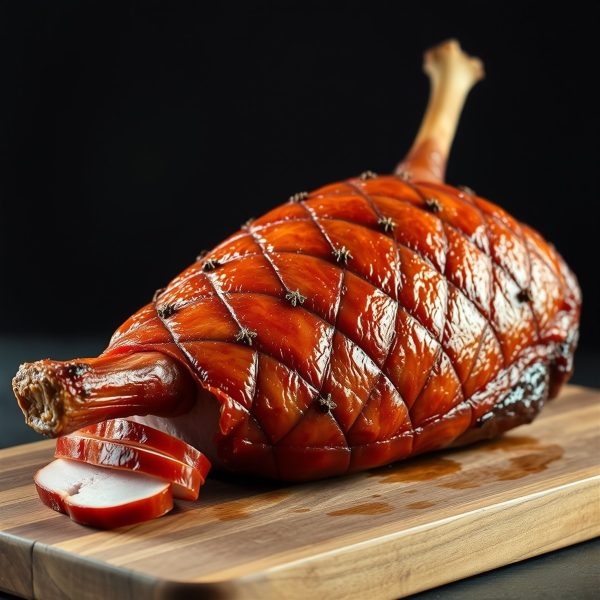
Diamonds about 3 cm across, cut through the fat only, never into the meat. Cutting into the meat lets juice out and it dries.
The scoring isn’t decorative. It opens up surface area for the glaze to catch in, and it lets the fat render out through the cuts instead of sitting in a solid layer.
A whole clove pressed into the intersection of each diamond is traditional. It’s also genuinely worth doing — cloves and pork are a very old pairing and the aroma is half the occasion.
The glaze, and when to put it on
Glaze goes on for the last 30 minutes only. Sugar burns. Put it on at the start and you’ll have a black ham after two hours.
Warm the ham through first, covered, then uncover, brush on the glaze, turn the oven up, and baste every ten minutes for the last half hour. Each layer sets and builds on the last, and by the third basting you’ll have a proper lacquer.
Hot or cold?
In New Zealand, mostly cold — and a glazed ham is arguably better on Boxing Day than it was on Christmas Day. Glaze it the day before, cool it, and refrigerate it wrapped in a damp tea towel rather than plastic, which sweats.
If you’re serving it hot, rest it 20 minutes before carving.
Frequently asked questions
How long do you cook a glazed ham?
A cooked ham only needs warming through — about 15 minutes per kilo at 160°C, then 30 minutes at 200°C with the glaze on. A 5 kg half leg is roughly 1 3/4 hours in total.
How do you get the skin off a ham?
Cut through the skin around the shank end, then slide your fingers between the skin and the fat and peel it back in one sheet. Use fingers rather than a knife so the fat stays on the ham.
When do you put the glaze on?
For the last 30 minutes only, basting every 10 minutes. Sugar glazes burn — applied at the start, the ham will be black long before it’s warmed through.
How much ham per person?
About 250 g per person if it’s the main event. A 5 kg half leg on the bone serves around 20 with leftovers.
Can I glaze a ham the day before?
Yes, and many people do. Cool it completely, wrap it in a damp tea towel rather than plastic, and refrigerate. Cold glazed ham is excellent and it takes the pressure off Christmas morning.
How long does leftover ham keep?
Up to 10 days in the fridge in a ham bag or a damp tea towel, changed every couple of days. Don’t use plastic wrap — it traps moisture and the ham goes slimy.
What do I do with the ham bone?
Pea and ham soup. Simmer the bone with split peas, onion, carrot and celery for two hours. It’s the second half of the value of buying bone-in.
Can I use golden syrup instead of honey?
Yes, and it’s arguably more traditional here. It gives a slightly maltier, less floral glaze.
Variations
- Marmalade and whisky — replace the honey with 3/4 cup marmalade and add 2 Tbsp whisky.
- Maple and mustard — maple syrup for the honey, wholegrain mustard for the Dijon.
- Pineapple — the retro version: pineapple rings pinned on with cloves, and pineapple juice in place of the orange.
- Spiced — add 1 tsp cinnamon and 1/2 tsp allspice to the glaze.
| Prep Time | 20 minutes |
| Cook Time | 1 hourminutes |
| Servings |
servings
|
- 1 cooked half leg ham on the bone about 5 kg
- 30-40 whole cloves
- 1 cup brown sugar firmly packed, 200 g
- 1/2 cup honey or golden syrup 170 g
- 2 Tbsp Dijon mustard
- 2 Tbsp orange juice
- 1 tsp ground cloves
Ingredients
Glaze
|
|
- Take the ham out of the fridge an hour before you start. Heat the oven to 160°C (140°C fan).
- Cut through the skin around the shank end, about 10 cm from the bone. Slide your fingers under the cut edge and peel the skin away in one piece, leaving the fat behind. Trim the fat back to about 1 cm if it's thicker than that.
- Score the fat in a diamond pattern, cuts about 3 cm apart and going through the fat only, not into the meat. Press a whole clove into each intersection.
- Sit the ham on a rack in a large roasting dish. Pour 2 cups of water into the dish — it stops the drips burning and keeps the oven humid. Cover loosely with foil.
- Bake for 1 1/4 hours to warm the ham through, about 15 minutes per kilo.
- Whisk the glaze ingredients together in a small saucepan and warm over a low heat until the sugar dissolves.
- Turn the oven up to 200°C (180°C fan). Remove the foil and brush a third of the glaze over the ham.
- Return to the oven for 30 minutes, brushing with more glaze every 10 minutes, until deep golden and sticky. Watch it in the last 10 minutes — it can catch quickly.
- Rest for 20 minutes before carving, or cool completely if serving cold.